Tourism is already the dominant economic force in most mountain communities. It’s just not being reinvested like one.
Every season, visitors pour billions into mountain towns across Canada, the U.S., Europe, and beyond. The returns flow to trail maintenance, ski lifts, and tourism marketing. Meanwhile, the locals who make these destinations worth visiting can’t afford to live in them. Housing is out of reach. Energy costs are punishing. Food security is an afterthought.
That’s not a funding problem. It’s a reinvestment problem. And tourism is the lever no one is pulling.
—
The Extractive Default
Mountain communities inherited their economic model from resource industries. Timber, mining, oil: extract maximum value, export the proceeds, leave the community to absorb the costs. Tourism adopted the same logic without noticing.
Visitors arrive. Money flows in. Some goes to infrastructure visitors use. Almost none goes to the structural costs of the community that hosts them. Housing inflated by short-term rental demand. Energy systems still running on centralized grids. Local food systems hollowed out in favour of imported convenience. The community subsidizes the experience; the experience doesn’t reinvest in the community.
This is fixable. But it requires treating tourism as a civic platform, not a marketing campaign.
—
What Reinvestment Actually Looks Like
Tourism’s real superpower isn’t the visitor count. It’s the daily contact between visitors, residents, entrepreneurs, and capital. No other sector generates that density of engagement in a small community. That engagement is an asset most mountain towns have never tried to use.
Redirect a fraction of tourism proceeds toward the actual cost-of-living infrastructure that makes communities liveable:
- Housing innovation: community land trusts, prefab, co-ownership models that actually work at mountain-town incomes
- Decentralized energy: solar, battery storage, microgrids that cut household bills and eliminate grid dependence
- Local food: year-round growing infrastructure, cooperative supply chains, food security that doesn’t collapse when a highway closes
- Shared mobility: electric transit and ride-sharing that reduces car dependence and connects workers to jobs without owning a vehicle
These aren’t idealistic add-ons. They are the biggest cost pressures facing the people who keep mountain communities running. Tourism inflated most of them. Tourism can help fix them.
—
The Living Lab Opportunity
Mountain towns have something most communities don’t: a global audience that already cares about them. Every week, visitors from major cities, and from countries with stronger regenerative policy frameworks, pass through. They bring capital, ideas, and networks.
From Revelstoke and Whistler to Verbier and Niseko, these destinations already attract the kind of talent and investment that could fund systemic change. The question is whether they’re positioned to capture it.
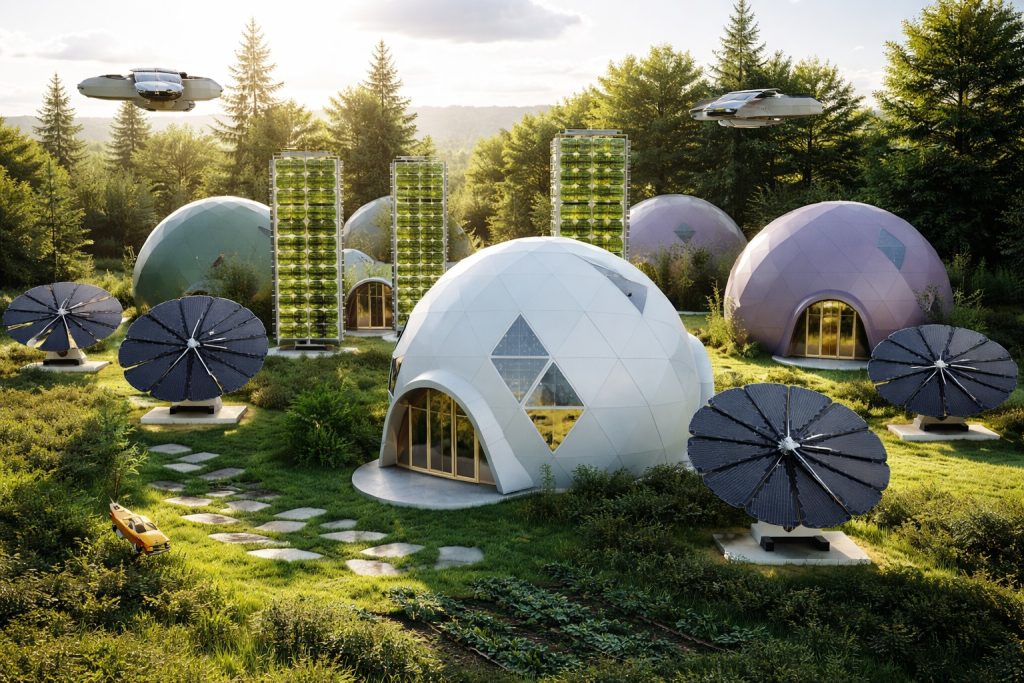
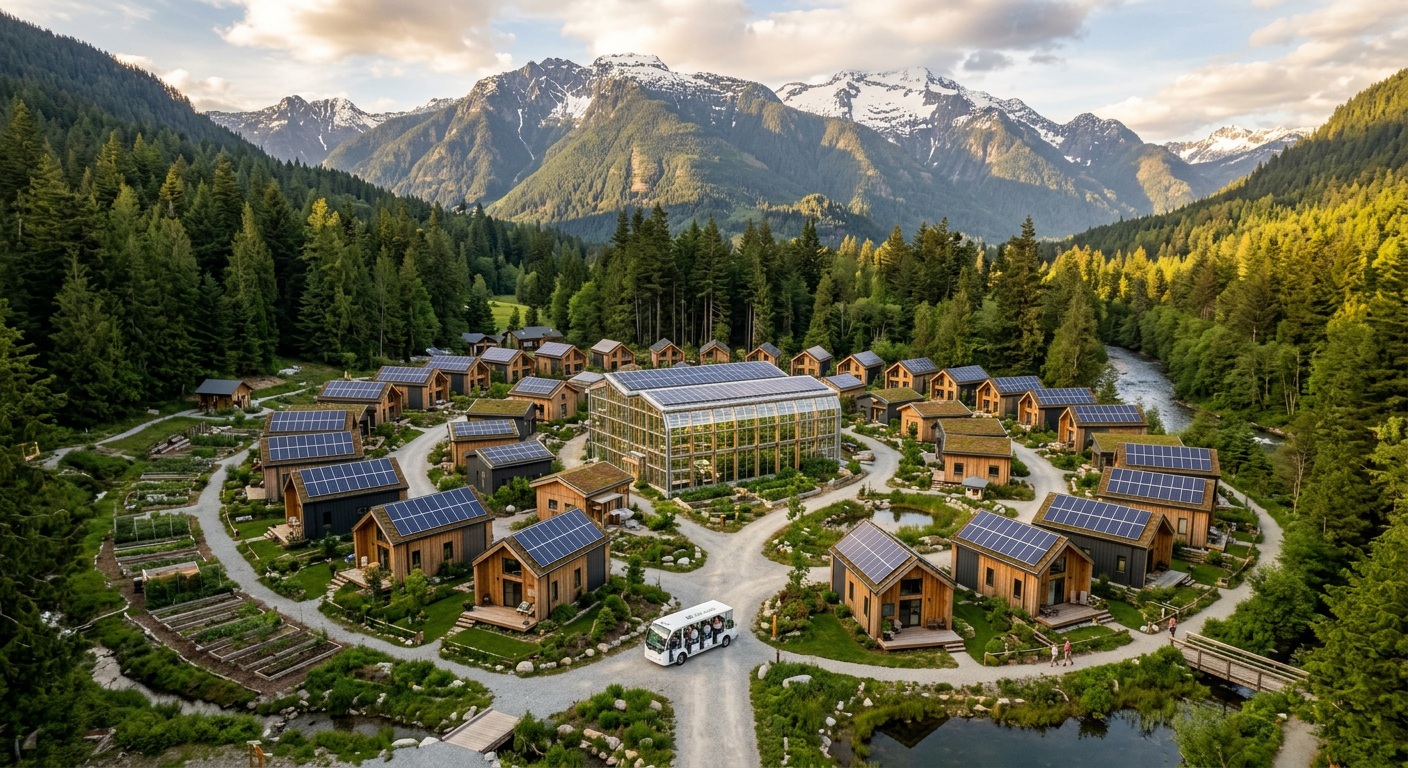
We are already co-creating new communities built with a different DNA entirely: places where housing, energy, food systems, and ecological stewardship are woven into the founding structure, not retrofitted as afterthoughts. Not pilot projects. Not marketing overlays. Communities designed from first principles around what it actually takes for people to thrive at a mountain-town income, in a mountain-town climate, for the long term.
The larger opportunity is for established mountain destinations, resorts with existing visitor flows and brand recognition, to evolve into proof-of-concept hubs for regenerative infrastructure. Not as a marketing angle. As actual civic strategy.
—
What Has to Change
1. Tourism revenue needs a reinvestment mandate.
A portion of accommodation taxes, lift ticket levies, or municipal tourism funds directed into housing, energy, and food infrastructure. Not trails. Not marketing. The structural costs that make communities viable for the people who live in them year-round.
2. Co-ownership replaces extraction.
Public-private-community funds where locals, entrepreneurs, and outside investors share ownership of essential infrastructure. Tourism profits flow into assets the community controls. This doesn’t require government to move first. It can be built privately and scaled.
3. Community voice gets real mechanisms.
Civic tech platforms that let residents set priorities, vote on projects, and hold institutions accountable in real time. Community legitimacy, built from the ground up, moves faster than traditional lobbying and is harder to ignore.
4. Technology serves the community, not the other way around.
AI, sensors, and distributed platforms can map ecosystems, balance energy loads, democratize decision-making, and slash the cost of building regenerative infrastructure. The tools are ready. What’s missing is the will to deploy them at the community level rather than the corporate one.
—
The Case for Moving Now
AI and robotics are about to dramatically reduce the cost of building homes, energy systems, and food infrastructure. The communities that have already started building regenerative models will compound that advantage. The ones still running on extractive defaults will find themselves competing for workers and residents they can no longer afford to house.
Mountain towns are not behind. They are, in many cases, better positioned than urban centres to pioneer this transition. Smaller scale. Higher civic density. Direct access to the natural systems that regenerative design works with, not against. A global visitor base that already values what they’re trying to protect.
The question isn’t whether this transition is coming. It’s whether mountain communities lead it or get overtaken by it.
—
Start Here
If you are building, investing in, or governing a mountain or rural community, and you want to move from extractive defaults to regenerative infrastructure, we want to hear from you.
Trails are not the mission. They are the welcome mat.