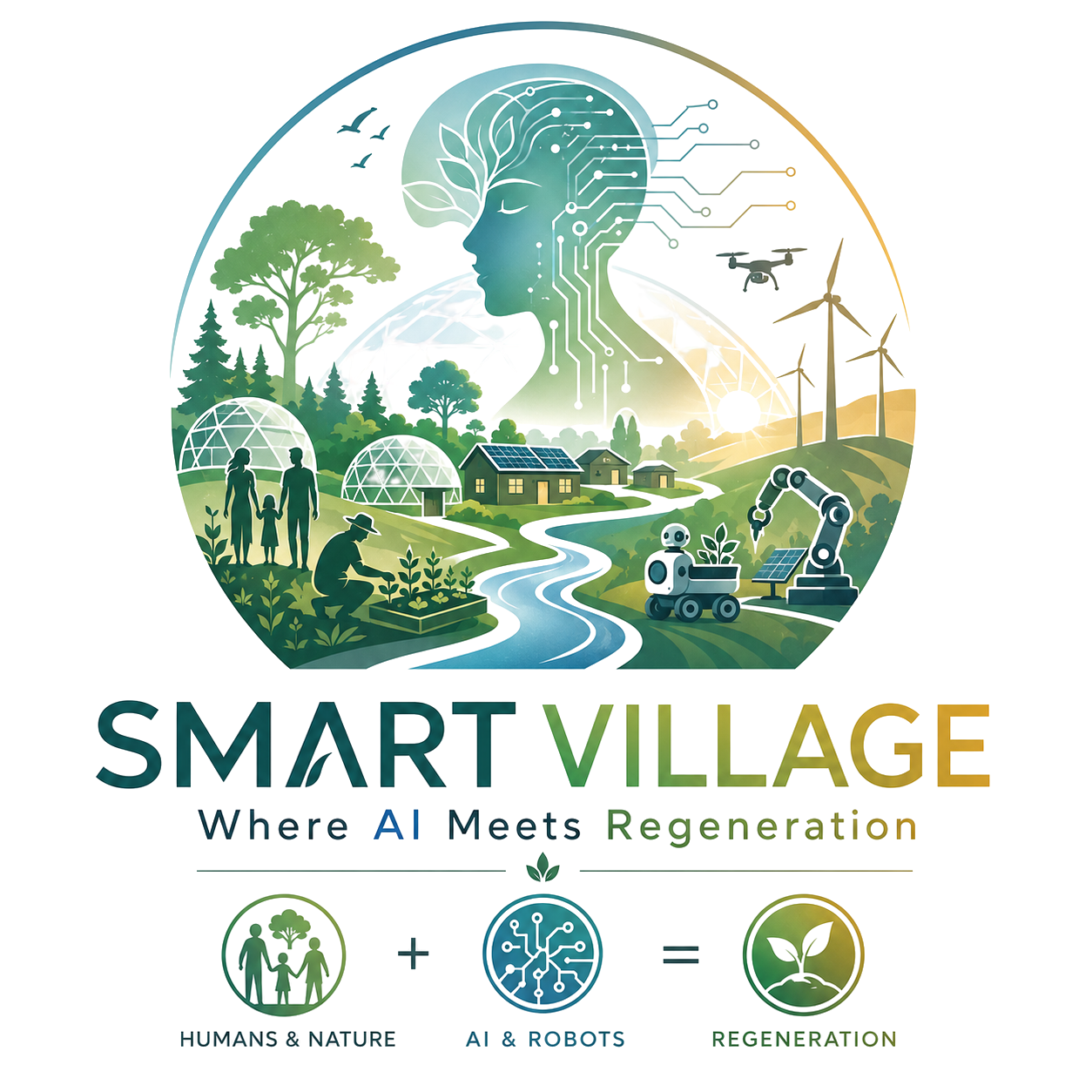
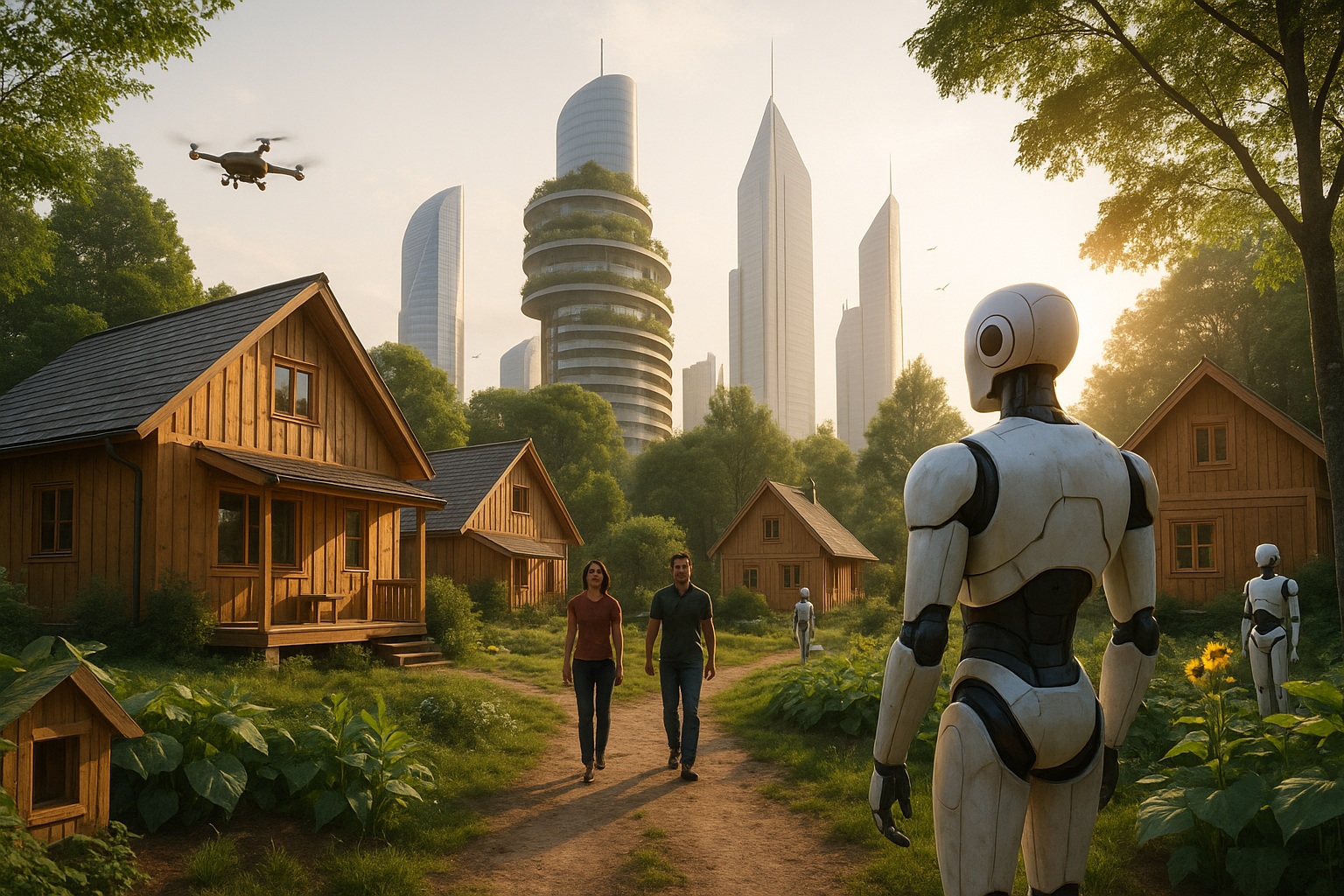
Something fundamental is shifting.
Not just new tools. Not just faster automation.
We are witnessing an upgrade to our shared Earth operating system.
AI agents are becoming capable collaborators. Humanoid systems are entering the physical world. At the same time, nature tech is emerging as a powerful bridge between intelligence and living systems. Together, these forces are reshaping how we work, build, care, and create value.
The future of abundance is not guaranteed. It depends on how prepared we are to work with intelligence across humans, machines, and nature.
This post is a practical guide to getting ready for 2026 and 2027.
What is actually changing
AI agents are moving beyond chat and into action. They can plan, execute, monitor, and adapt across workflows.
Humanoid systems are beginning to take on physical tasks in logistics, construction, agriculture, caregiving, and disaster response.
Nature tech is connecting sensors, AI, and ecological knowledge to help cities, landscapes, and ecosystems become healthier and more resilient.
This convergence is not about replacing humans. It is about expanding what is possible when intelligence is distributed across systems.
A readiness checklist for the new Earth OS
1. Learn to work with AI agents, not just prompts
AI agents function best when treated like collaborators with roles, goals, and feedback.
Checklist:
- Identify repetitive or cognitive heavy tasks to delegate
- Practice writing outcome focused instructions
- Build weekly workflows that include agent support
- Review and refine agent outputs regularly
- Track where leverage increases when you let go
2. Start understanding humanoid systems early
Humanoids will change physical work as deeply as software changed information work.
Checklist:
- Follow developments in robotics and embodied AI
- Learn where humanoids are being deployed first
- Think in terms of collaboration, not replacement
- Anticipate new roles in coordination, oversight, and design
3. Integrate nature tech into your worldview
Technology is no longer separate from nature. Some of the most important innovation is happening at their intersection.
This year i read The Nature of Our Cities by Nadina Galle, which explores how AI, sensing, and data can help cities regenerate ecosystems and human wellbeing rather than degrade them.
I am also reading Becoming Nature Positive, which outlines how we can move beyond reducing harm toward actively restoring biodiversity and planetary health.
These works point to a future where technology supports life systems, not extraction.
Checklist:
- Learn how AI is being used for ecosystem monitoring and restoration
- Support nature positive goals in your work or community
- Spend time understanding basic ecological principles
- Look for projects where tech strengthens living systems
4. Build creative and systems intelligence
As machines take over analytical and repetitive work, human value shifts toward synthesis, creativity, and sense making.
Checklist:
- Practice asking better questions, not just finding answers
- Develop systems thinking across tech, economy, and ecology
- Combine intuition with data
- Create time for imagination and exploration
5. Develop adaptability as a core skill
The speed of change makes rigid plans fragile.
Checklist:
- Update goals quarterly instead of annually
- Treat experiments as learning loops
- Build networks across disciplines
- Release outdated identities and roles
AI agent tools to start using now
You do not need to master everything. Start small and build fluency.
General AI and agent platforms
- ChatGPT with tasks and custom GPTs for planning, research, and synthesis
- Claude for long form reasoning and strategy
- Gemini for multimodal workflows
Agent orchestration tools
- CrewAI for multi agent collaboration
- LangChain and LangGraph for structured agent workflows
- Relevance AI for business and operations focused agents
Workflow and productivity
- Notion AI for knowledge systems
- Zapier AI for connecting agents to real world actions
- Email and calendar agents for prioritization
Nature tech tools
- Digital twins for cities and ecosystems
- Environmental sensing platforms for biodiversity, water, and air
- Regenerative design software integrating ecological data
Where to learn and stay grounded
Learning is ongoing. Choose depth over noise.
Places to learn:
- DeepLearning.AI for practical agent systems
- Stanford Human Centered AI for resource on responsible design
- MIT Technology Review for emerging trends
- Nature Positive Initiative for biodiversity and systems thinking
- Nadina Galle’s work on urban nature tech
Follow people who bridge technology, ecology, ethics, and culture, not just hype cycles.
What most people are missing from their 2026–27 futureproof plan
This is where real readiness lives.
Psychological readiness
Change at this pace affects identity and nervous systems. Emotional regulation and comfort with uncertainty are essential.
Systems thinking
Understanding feedback loops across technology, economy, and nature prevents short sighted decisions.
Ethical agency
Not just what can be automated, but what should be automated.
Relationship intelligence
Trust, collaboration, and community grow in value as machines get smarter.
Embodied intelligence
Health, intuition, and time in nature keep humans grounded in a fast digital world.
Ecological literacy
Abundance without ecological understanding leads to collapse, not flourishing.
A simple timeline to get ready
Early 2026
- Delegate core workflows to AI agents
- Build foundational literacy in robotics and nature tech
Mid 2026
- Launch a project blending human creativity, AI leverage, and ecological impact
- Speak to me about people doing those projects to co-create!
Late 2026 into 2027
- Refine ethical frameworks and long term direction
- Position yourself in roles that create meaning, regeneration, and resilience
Closing thought
The future is not about keeping up with machines.
It is about learning how to steward intelligence across humans, AI, and living systems.
Those who thrive will not be the most automated.
They will be the most integrated.
See you in our nature tech future.

