
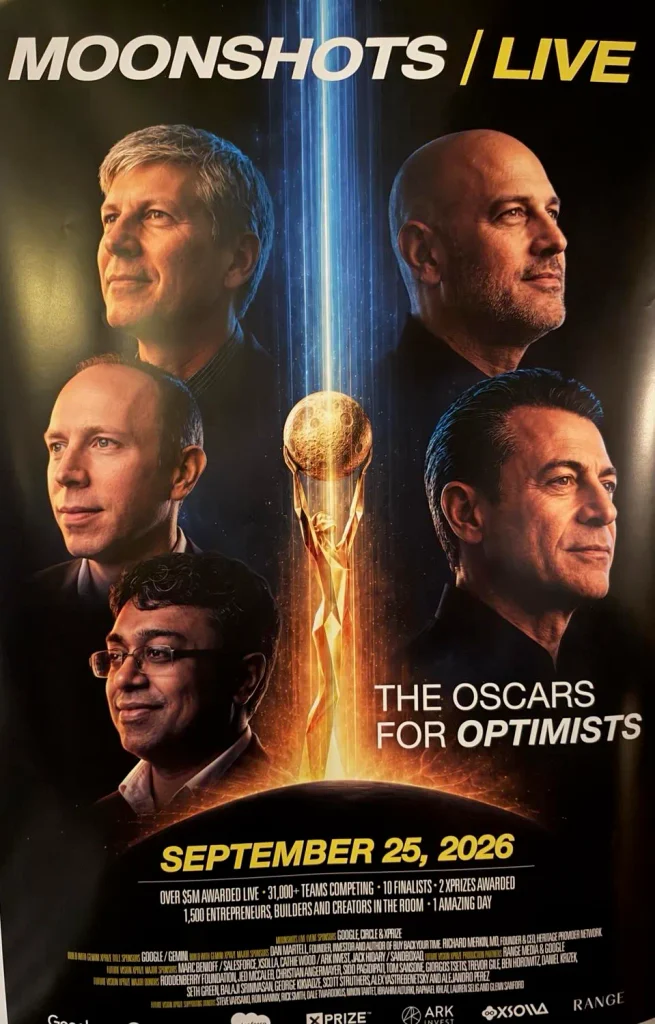
Moonshots Conference gets it more right than almost anyone. Gather brilliant people, build genuine energy in a room, point that energy at problems that matter. And XPrize is pointing in the right direction too: incentive competitions that reward breakthrough solutions have unlocked more genuine innovation per dollar than almost any government program ever designed.
But both are still selecting from the top.
The future is being designed by a remarkably small group of remarkable people and handed to everyone else as a product. The elder who has watched the lake change for 40 years is not on that stage. The nurse, the farmer, the young couple priced out of every city they ever wanted to live in: they are the audience, not the architects.
That is the gap. Not a gap in intelligence or vision. A gap in who gets to do the futurescaping.
When residents co-create their own future instead of consuming someone else’s vision of it, something fundamentally different happens. The solutions fit. The buy-in is real. The community actually builds the thing.
So let me be direct about what is not working everywhere else.
The Campaign Problem
Climate campaigns are not working. Housing campaigns are not working. Smart city campaigns are not working. Regenerative living campaigns are not working.
Not because the ideas are wrong. Because the stack is backwards.
Most campaigns launch with a strategy deck, a social media calendar, and a hope that AI-generated content finds the right people at the right moment. The assumption is that information changes behaviour. It does not. Inspiration does. And inspiration is not a content format. It is an experience.
The hierarchy that actually works looks like this:
IRL events with an AI layer drive real transformation. People feel something, decide something, commit to something in rooms with other people. The AI layer makes the experience smarter, the follow-up personal, and the network effect permanent.
Managed action converts that energy into next steps. Someone captures commitments, routes people to resources, keeps the momentum alive after the event ends.
AI agents then do the work that humans cannot sustain: matching, coordinating, following up, connecting nodes across a growing network.
Local hardware (the dome, the solar array, the land trust, the food forest) becomes the physical proof point that the inspiration was real.
Reverse that order and you get what most campaigns produce: a beautiful website, a modest email list, and a pilot project that never scales.
The Futurescaping Gap Nobody Is Addressing
Here is what I have not seen done anywhere, and I have been inside Canada’s national housing strategy, the Smart Cities Challenge, and a dozen regenerative community projects across three countries.
Nobody is futurescaping property with ordinary people.
Every vision of the future home is pitched at wealthy early adopters, tech executives, and impact investors. The renders are gorgeous. The price tags are not mentioned. The family in Canada earning $75,000 a year looks at a natural home or an off-grid village and thinks: not for me.
That is a catastrophic failure of imagination and communication.
The people who most need regenerative community living, the ones paying 60% of their income on rent, the ones isolated in suburban sprawl, the ones aging without neighbours who know their names, are never shown a version of this future that includes them.
That changes now.
What We Are Launching
We are building a future of abundance campaign built around three things that have never been combined before.
The creative intelligence: Jason Silva and Brad Necyk
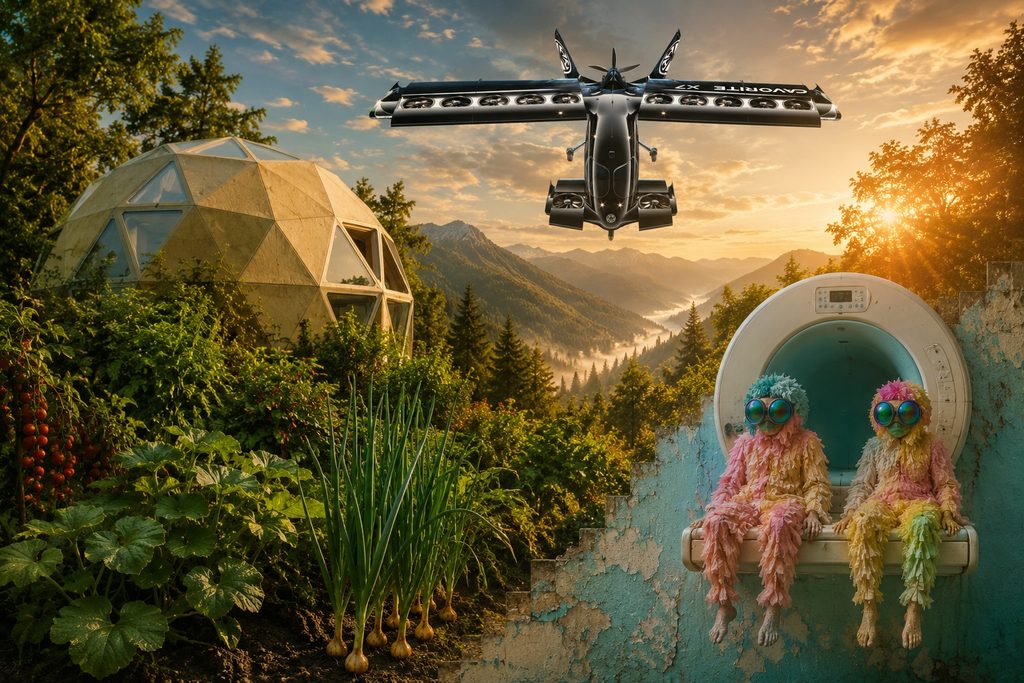
Jason is the most compelling communicator alive on the subject of human possibility and technological transformation. Brad is one of Canada’s most visionary artists and filmmakers. Together through Sanctioned Elsewhere they produce work that makes people feel the future before they can think their way around it. That is exactly what this campaign needs. Not more explainer content. Felt experience.
The proof of concept: Etherlaken
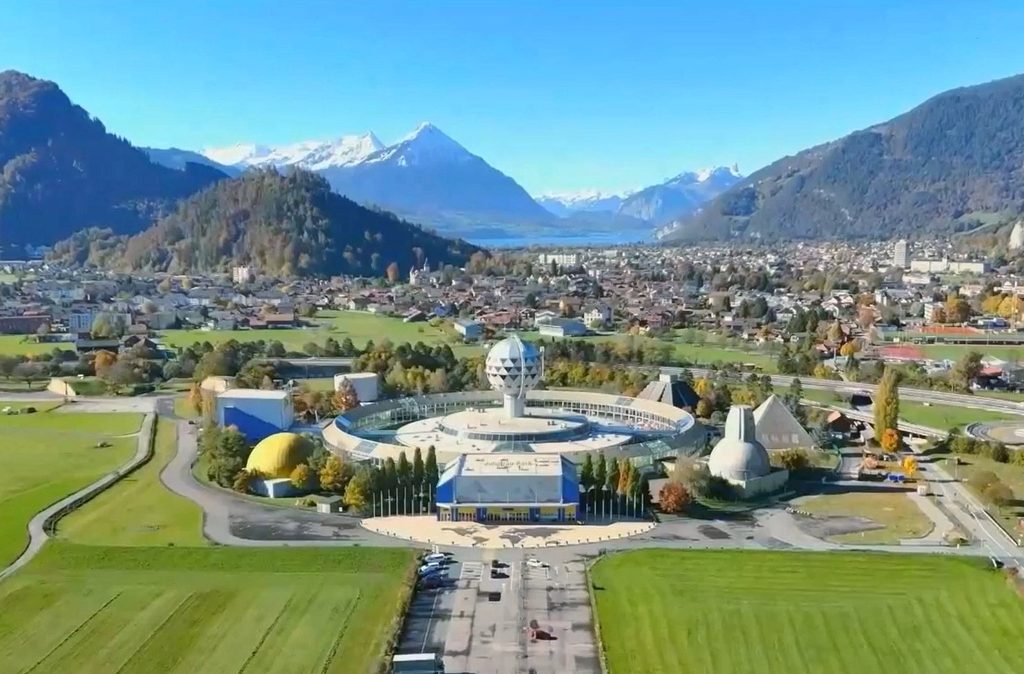
In Interlaken, Switzerland, a regenerative innovation campus is already operating with Ethereum co-founder Mihai Alisie’s backing. It is the clearest living demonstration that the model works across cultures, climates, and economic contexts. We are bringing that story to Canada and connecting it to what we are building in the Americas because people need to see that this is not theoretical. It exists. You can visit it.
The Canadian launch vehicle: the Kootenay Events Collective
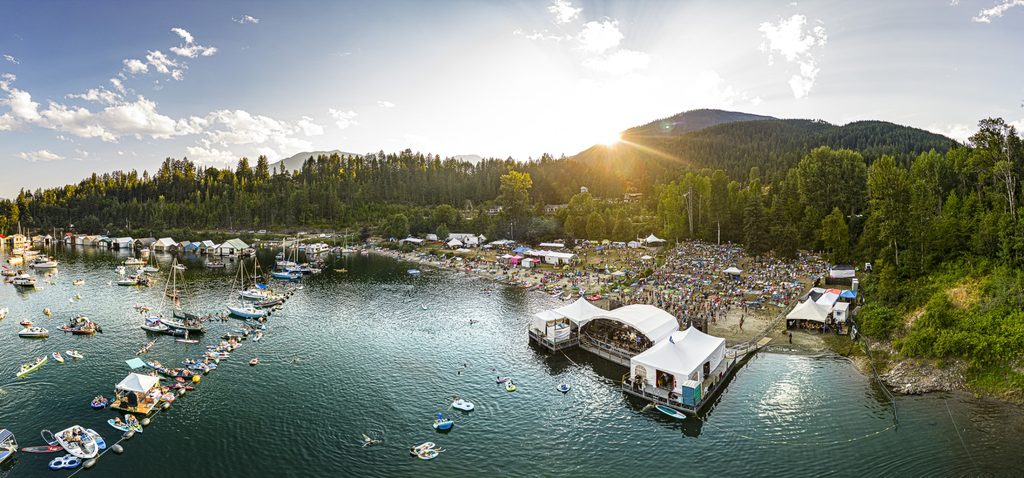
KEC is not an events company. It is a coordination infrastructure for community transformation, using IRL experiences as the activation layer for everything above. The first events are already in planning. The AI layer is being built through Regen AI. The hardware exists through our Canadian off-grid and prefab ecosystem.
The formula is: create an unforgettable experience, let the AI layer capture and route the energy it generates, connect people to real projects and real land, show them the version of the future that includes them.
Why the Kootenays
Because the Kootenays already have more regenerative community infrastructure per capita than anywhere else in Canada. Tiny home builders, mass timber production, microhydro cooperatives, a community land trust in active development, a civic AI platform being built by a non-profit, and a culture of neighbours who actually know each other.
This is not where the campaign ends up. It is where it is credible enough to start.
The Invitation
If you are a filmmaker, a developer, an investor, a municipality, a family looking at land, or a foundation that has been funding campaigns that are not working, this is the conversation I want to have.
The future of regenerative community living does not need another strategy deck. It needs a room full of the right people, a creative team that can make them feel something, and a coordination layer that turns that feeling into action.
We are building that room. Book a meeting with us!

